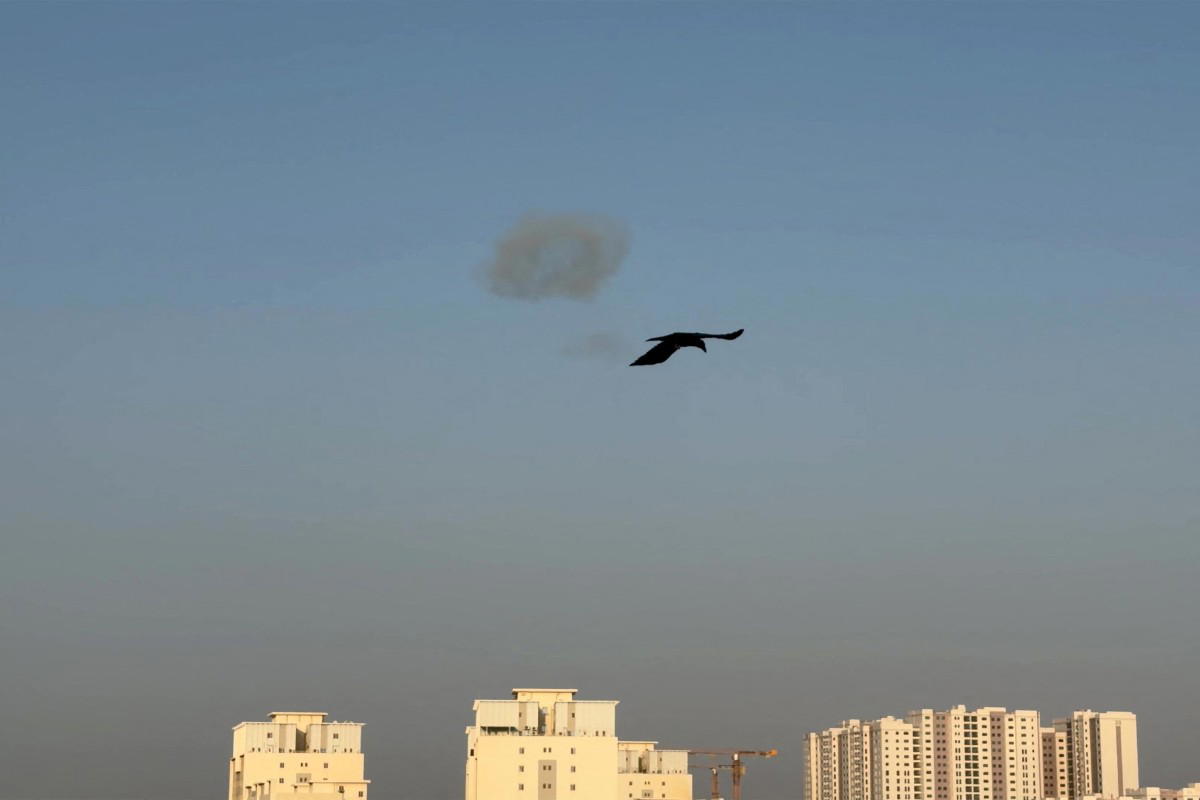
This video grab taken from UGC images posted on social media on September 2, 2026 and verified by AFPTV teams shows a bird flying as smoke is seen in the sky in northern Bahrain following Iranian drone and missile attacks amid efforts by Bahraini authorities to intercept incoming projectiles. Iranian forces said on September 2 that they launched attacks on US military targets in the United Arab Emirates, Kuwait, Bahrain and other countries in the region, vowing “severe” consequences for renewed American attacks on the Islamic republic. (Photo by UGC / AFP) / – Israel OUT / RESTRICTED TO EDITORIAL USE – MANDATORY CREDIT AFP – SOURCE: UGC / UNKNOWN – DISTRIBUTED AS A SERVICE TO CLIENTS – NO RESALE – NO ACCESS ISRAEL MEDIA/PERSIAN LANGUAGE TV STATIONS OUTSIDE IRAN/ STRICTLY NO ACCESS BBC PERSIAN/ VOA PERSIAN/ MANOTO-1 TV/ IRAN INTERNATIONAL/RADIO FARDA – AFP IS NOT RESPONSIBLE FOR ANY DIGITAL ALTERATIONS TO THE PICTURE’S EDITORIAL CONTENT /
Iran’s top negotiator Mohammad Bagher Ghalibaf on Wednesday called the United States “Satan” after an attack on a wedding ceremony in the country’s south.
At least four people were killed and dozens wounded in a late-night strike on the ceremony in Kuhestak in southern Iran, according to Iranian officials.
Ghalibaf said the attack left “children killed with families”, while singling out several deadly incidents in Iran during the initial stages of the Middle East war, including an attack on a school in Minab.
“If a power acts like Satan, picks targets like Satan, and kills like Satan, it’s Satan. Shields a junior Satan that does the same? It’s THE Great Satan,” said Ghalibaf in a post on X, referring to the US and key ally Israel.
The ‘Satan’ term was originally coined by Ruhollah Khomeini, founder of the Islamic Republic, in 1979 and has since been used by successive Iranian leaders to refer to the United States.
Iran responded to the wedding attack by launching drone and missile attacks on US bases across the Middle East, including in Bahrain, Kuwait, the United Arab Emirates and Iraq’s Kurdistan region.
The US military did not address the wedding strike directly.
US Central Command (CENTCOM) spokesman Tim Hawkins said “the US military never targets civilians, unlike the IRGC”, referring to Iran’s Revolutionary Guards.
Disclaimer
Comments expressed here do not reflect the opinions of Vanguard newspapers or any employee thereof.